Research
SELF-KNOWLEDGE · · 3 min read
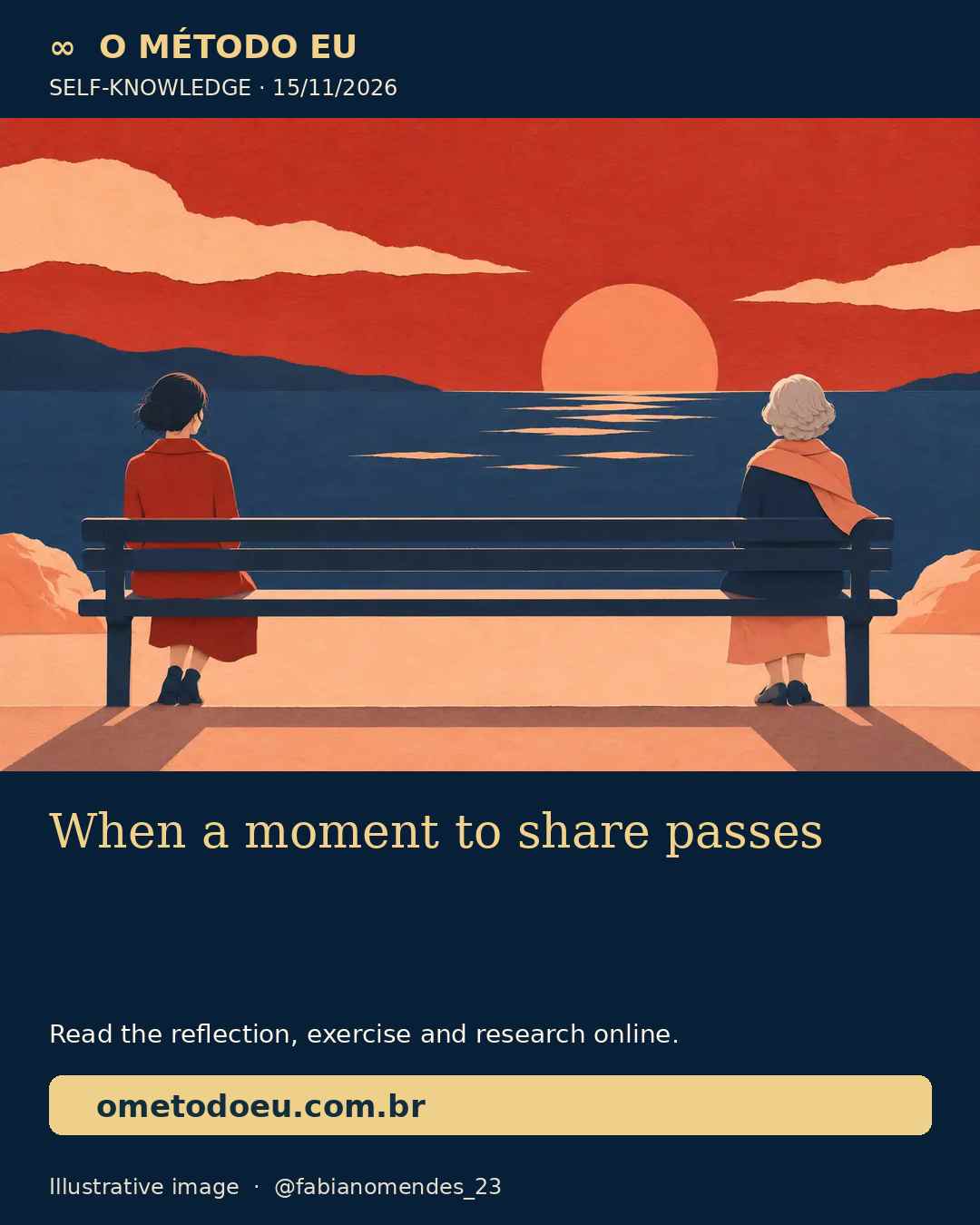
When a moment to share passes

You meet someone new. They mention a small pleasure they look forward to each week. You think of an answer of your own, but the conversation moves on. Later, you may wonder whether you wanted to stay quiet or simply needed a moment to decide.
Those are different reasons. Recognizing which one fits gives you more room to choose what happens next. You might return to an ordinary topic, ask a question, or leave the conversation as it was. A private detail can stay private even when you want to feel closer to someone.
An exercise in noticing
Recall a recent, low-stakes conversation in which you chose not to share something. Without writing the private detail, note what made you pause and what would have made sharing feel welcome. Then think of a harmless detail you might offer in a similar situation. There is no need to send a message or revisit a conversation that felt unsafe.
Question: How can you tell whether you stayed quiet out of preference or because you needed more time?
An educational editorial exercise, not a clinical protocol.What the research investigated
Seh-Joo Kwon, Casey M. Nicastri, Jamil P. Bhanji and Mauricio R. Delgado at Rutgers University–Newark (United States) ran a preregistered, two-day study with a final sample of 46 adult students. During an fMRI task, participants repeatedly chose whether to show their answers to get-to-know-you questions to an apparent partner. They often reported regret when they held back and then saw that their partner had shared. They tended to switch to sharing next, and participants who experienced more of those moments reported faster increases in closeness. For some imaging comparisons, researchers analysed smaller subsets; activity in part of the temporal cortex was associated with subsequent sharing.
Limitations: The experiment used a scripted exchange with an apparent partner and measured reported closeness in the short term. The study does not show that missed opportunities cause closeness or that a brain response made anyone disclose. It cannot tell us how much to share or when a real conversation is safe.
Kwon S-J, Nicastri CM, Bhanji JP, Delgado MR. Regretting a chance to connect: How neural responses to missed social opportunities predict self-disclosure. PNAS Nexus, 5(5), pgag138. Published online 24 April 2026. DOI: 10.1093/pnasnexus/pgag138.
Source checked on 15 November 2026. Earlier research revisited today; no claim of scientific novelty or evidence for the books.
Read the primary source →Original research date: 2026-04-24.
Entirely fictional example
Entirely fictional example: Jo hears a neighbour mention her favourite morning walk. Jo stays quiet at first. At their next meeting, Jo mentions a bakery along the route and decides to keep a more personal detail to herself.
An invented example for reflection, not a research report, testimonial or evidence.Keywords: self-knowledge, conversation, boundaries, disclosure, closeness
Download the Instagram image → · Copy or download the caption →
Editorial connection with O MÉTODO EU
The editorial link with O MÉTODO EU is to notice what drives a familiar response and make a deliberate choice about what to say. The study did not evaluate the book.
A thematic connection made by the editorial team. These sources do not test the book’s effectiveness; the people mentioned are not presented as readers or endorsers of the book.Outros livros, edições e lojas
- Read the free sample and view editions
- View this Portuguese edition on Amazon Brazil
- Read the free sample and view editions
- View this Portuguese edition on Amazon Brazil
- Consulte os benefícios Prime na AmazonCapa comum — ideal para a prática do métodoVer na Amazon Brasil ↗*Consulte a elegibilidade Prime e as condições de entrega na Amazon. Publicidade · link de associado.
- United States · English — The Me Method ↗
- France · Français ↗
- 🌐 Choose from 13 Amazon stores →
Share: WhatsApp, Instagram, image and link
Instagram: download the image and choose it from your gallery in Instagram. Copy the caption below; use the link sticker in Stories.