Research · 4 min de leitura
SELF-KNOWLEDGE · · 3 min read
Can kindness leave room to improve?
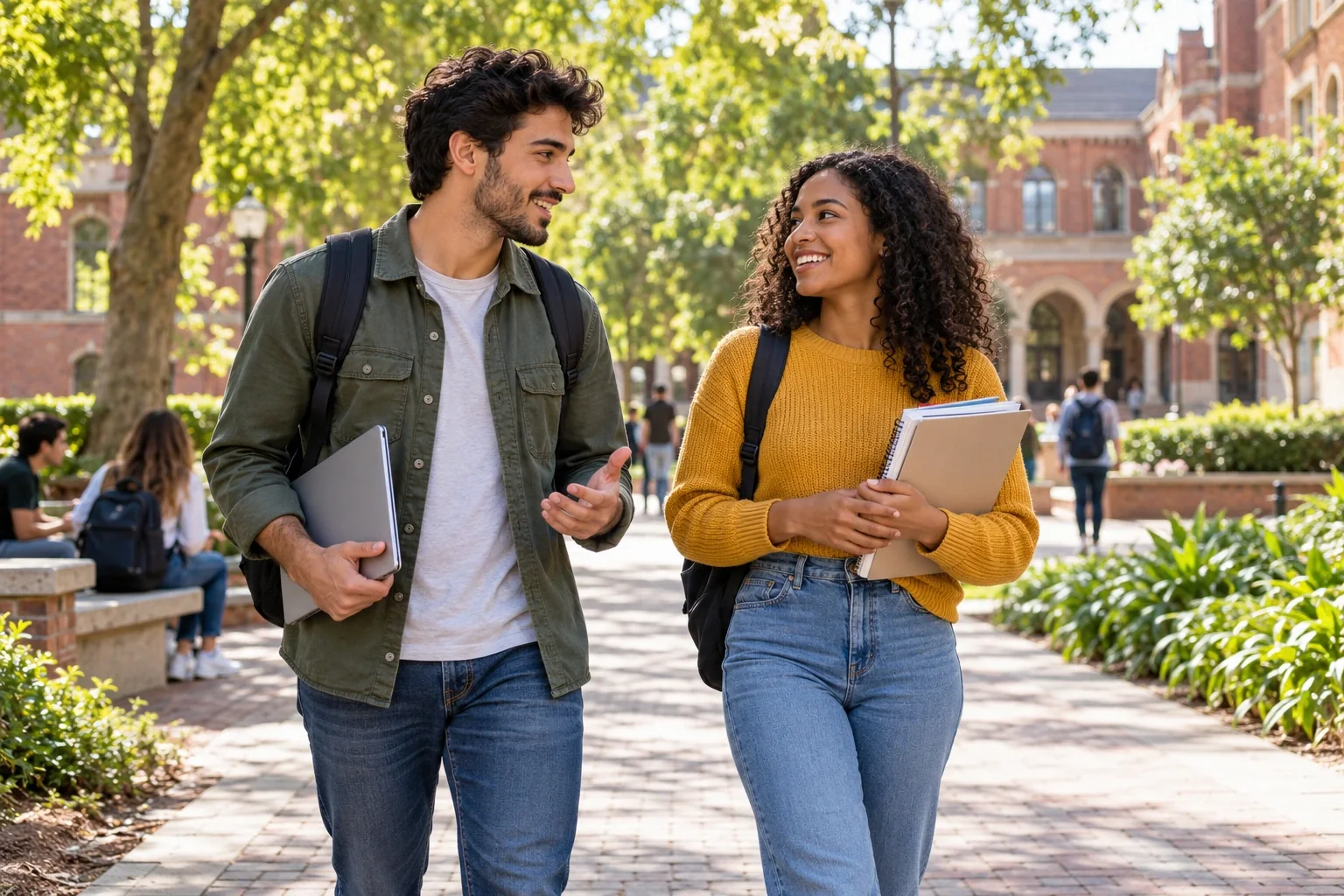
After a mistake, you may think that harshness is the only way to take responsibility. But a judgment about your entire worth gives you little information about what to do next. You can name what happened without turning it into a permanent description of yourself.
Kindness does not require ignoring another person's experience or demanding forgiveness. It can make room for an honest question: what can I repair, learn or practise? Responsibility includes respecting the other person's boundaries and accepting that some outcomes are outside your control.
An exercise in noticing
Choose a small, low-stakes mistake. Describe the action without a label about your character. Write one sentence you would offer a friend who wanted to take responsibility, then identify a feasible next step. Repair must respect consent; do not contact someone who has asked for distance. This is an educational reflection, not a treatment or a promise of improved performance.
Question: What would taking responsibility look like if it did not require insulting yourself?
An educational editorial exercise, not a clinical protocol.What the research investigated
Juliana G. Breines and Serena Chen at the University of California, Berkeley, reported four experiments, including undergraduate samples, in 2012. Self-compassion instructions were compared with self-esteem, distraction or no-intervention conditions. Depending on the experiment, participants reported greater motivation to make amends or change a weakness; after an initial test failure, one group spent more time studying. These are findings about particular experimental tasks, not a general guarantee of success.
Limitations: Brief experiments and partly self-reported intentions do not establish lasting behaviour change or recovery from illness. Student samples and laboratory tasks limit generalisation. The editorial exercise here differs from the experiments. This is research first published in 2012, not a new discovery; it did not test the books or establish benefits for children.
Breines, J. G.; Chen, S. Self-compassion increases self-improvement motivation. Personality and Social Psychology Bulletin, 38(9), 1133–1143. First online 29 May 2012; September 2012 issue. DOI: 10.1177/0146167212445599.
Source checked on 23 October 2026. Earlier research revisited today; no claim of scientific novelty or evidence for the books.
Read the primary source →Original research date: 2012-05-29.
Entirely fictional example
Entirely fictional example: Alex misses a deadline for a voluntary reading group. Instead of calling himself unreliable in every part of life, he acknowledges the missed commitment and asks whether a later contribution would still be useful. The organiser may decline. This invented example is not a participant account or evidence of an effect.
An invented example for reflection, not a research report, testimonial or evidence.Keywords: self-knowledge, self-compassion, responsibility, learning
Download the Instagram image → · Copy or download the caption →
Editorial connection with O MÉTODO EU
The editorial link with O MÉTODO EU is examining a pattern while keeping responsibility and possible changes specific.
A thematic connection made by the editorial team. These sources do not test the book’s effectiveness; the people mentioned are not presented as readers or endorsers of the book.Outros livros, edições e lojas
- Read the free sample and view editions
- View this Portuguese edition on Amazon Brazil
- Read the free sample and view editions
- View this Portuguese edition on Amazon Brazil
- Consulte os benefícios Prime na AmazonCapa comum — ideal para a prática do métodoVer na Amazon Brasil ↗*Consulte a elegibilidade Prime e as condições de entrega na Amazon. Publicidade · link de associado.
- United States · English — The Me Method ↗
- France · Français ↗
- 🌐 Choose from 13 Amazon stores →
Share: WhatsApp, Instagram, image and link
Instagram: download the image and choose it from your gallery in Instagram. Copy the caption below; use the link sticker in Stories.