SELF-KNOWLEDGE · · 3 min read
Is this quiet time a choice?

You can want company and still welcome a little space. You can also be alone without having chosen it. Treating these situations as identical can hide what you need. Instead of asking whether time alone is always good or bad, ask what this particular moment means for you and how much choice you have.
Why this matters now
On 9 October 2026, WHO called for a shift towards person-centred community mental health care that respects rights and choices. That policy context is not an endorsement of solitude exercises. It helps frame a crucial distinction for this editorial reflection: freely chosen privacy is not the same as imposed isolation or lack of support.
Read the context source →A quiet interval is not a performance of independence. It need not become a retreat, a discipline or proof that you need nobody. You may enjoy it, feel restless or decide to seek company. Your response is information, not a score. Having access to people and support matters even when you choose not to interact for a while.
An exercise in noticing
If you have a safe opportunity, choose a short quiet interval with a clear way to end it. Pick an ordinary activity you find acceptable, or simply sit comfortably. Notice whether being alone feels chosen and whether you would prefer contact. You may stop at any time and reach out to someone you trust. Do not withdraw from needed support, cancel care or turn isolation into a challenge. No particular emotional response is required.
Question: Do you want a little space, more connection, or help making either one possible?
An educational editorial exercise, not a clinical protocol.What the research investigated
Nguyen, Ryan and Deci reported four studies comparing affective experiences under different solitude conditions, including being with another person, reading, thinking and having an active choice. Solitude generally reduced high-arousal affect of both positive and negative kinds; choice and what people thought about moderated some effects. The authors’ affiliations included the University of Rochester, United States, alongside institutions in Australia and Norway.
Limitations: Short experimental periods and reported feelings do not demonstrate that prolonged isolation is beneficial or that solitude treats distress. Reduced emotional activation is not the same as greater happiness. Access to support and personal circumstances matter. This editorial exercise is not the research protocol, is not intended for children and does not establish the books’ effectiveness.
Nguyen, T.-V. T.; Ryan, R. M.; Deci, E. L. Solitude as an Approach to Affective Self-Regulation. Personality and Social Psychology Bulletin, 44(1), 92–106. First published online: 26 October 2017; issue: January 2018. DOI: 10.1177/0146167217733073.
Source checked on 20 October 2026. Earlier research revisited today; no claim of scientific novelty or evidence for the books.
Read the primary source →Entirely fictional example
Entirely fictional example: Asha has a free interval before a family visit. She chooses to sit outside with a drink, keeping her phone available. After a few minutes, she realizes she would rather call a friend and does so. The story values her choice, not a supposedly correct amount of solitude, and does not represent a research participant or clinical outcome.
An invented example for reflection, not a research report, testimonial or evidence.Keywords: self-knowledge, solitude, choice, emotional awareness, connection
Download the Instagram image → · Copy or download the caption →
Educational content for adults. It does not replace professional assessment or support.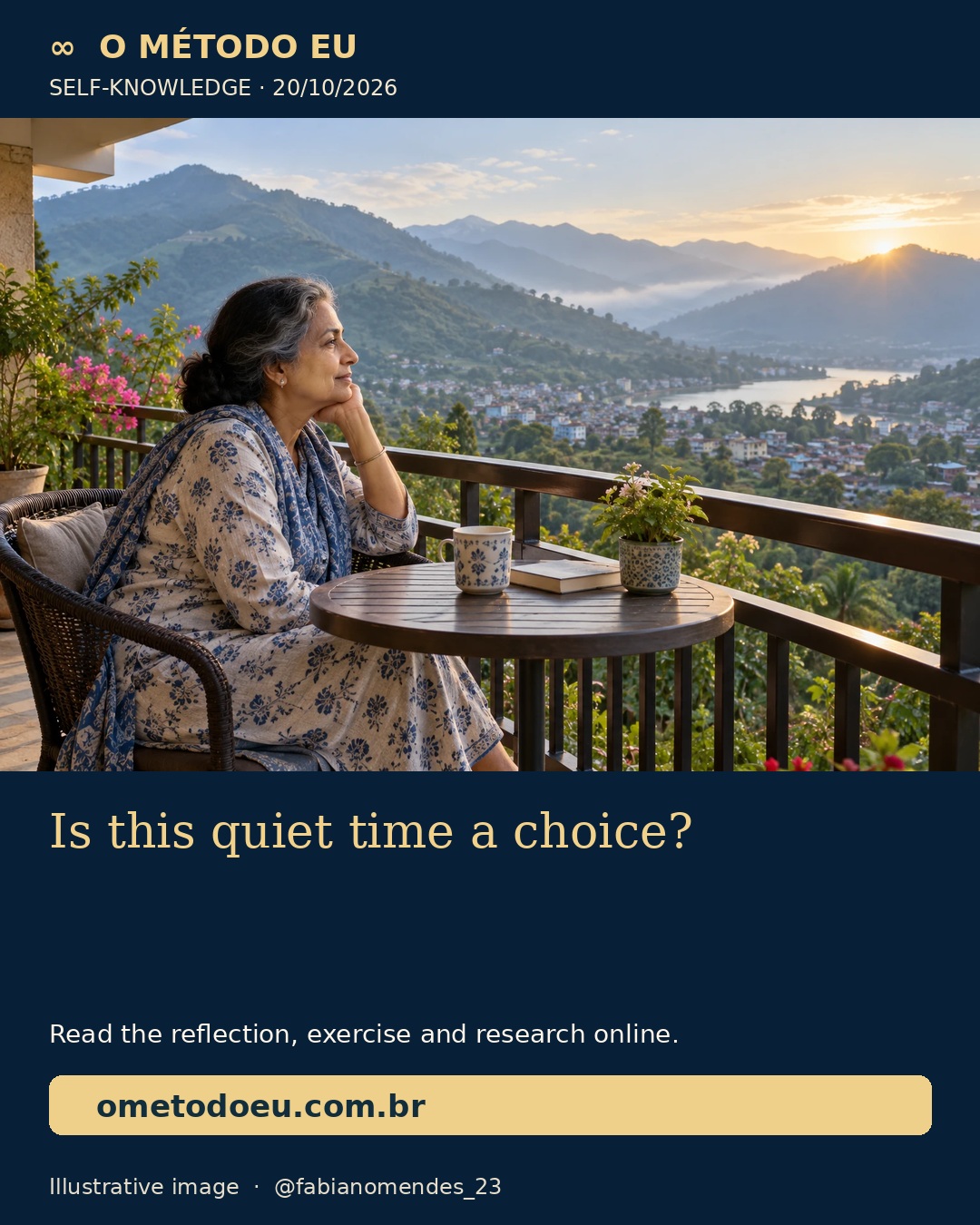
Outros livros, edições e lojas
- Read the free sample and view editions
- View this Portuguese edition on Amazon Brazil
- Read the free sample and view editions
- View this Portuguese edition on Amazon Brazil
- Consulte os benefícios Prime na AmazonCapa comum — ideal para a prática do métodoVer na Amazon Brasil ↗*Consulte a elegibilidade Prime e as condições de entrega na Amazon. Publicidade · link de associado.
- United States · English — The Me Method ↗
- France · Français ↗
- 🌐 Choose from 13 Amazon stores →
Share: WhatsApp, Instagram, image and link
Instagram: download the image and choose it from your gallery in Instagram. Copy the caption below; use the link sticker in Stories.